For most families in Arroyo Grande, dinnertime comes and goes, followed by a lively or quiet discussion. This result is usually unintended. No one sits down to sit around having a superficial conversation. However, there are times when some tables foster connection, while others lead to a lack of conversation, distracting diversions, or short answers.
Common reasons for low talking are low mood, tiredness or stress. Often, the table is overlooked when addressing family influences. If the dinner appears to be different from a friend's round table than from a long rectangular table, that's true. The form of a table subtly affects interpersonal dynamics.
It has nothing to do with superstition or ideas from Feng Shui. It is connected to basic human behaviours such as understanding facial expressions, understanding authority, and, without knowing it, determining the order of a conversation. Furniture not only performs a functional role but also helps to structure social interaction. The form of the dinner table could have more impact on the family than is realised, for in a busy world, with digital distractions present, a certain conversation can be found only where the shape of the dinner table extends an invitation.
Why Shape Talks Before Words Do
The seating arrangement of the table before the verbal exchange can occur will define the proximity of the seats, the visibility of the people seated at the table, and the actual physical position of the people seated at the 'head' of the table (which may or may not be a place of authority).
Spatial arrangements resonate with individuals – at times unconsciously. Individuals know where people are in authority, in the centre, and on the periphery. This automatic evaluation takes place around a table, similar to how tone or body posture is automatically recognised.
At this point, shape is important, as it will shape the table. A rectangular table has a geometry that results in a linear arrangement with definite endpoints. Such endpoints can denote rank, with people at the top or bottom of the list, and those on the side are usually facing forward or sideways. A round table, on the other hand, has no endpoints and no hierarchy in the room, as all seats are equally important.
These dynamics are not intentional on the part of families. The interesting thing with this is that positioning a teenager a long way down a long table away from parents, usually a number of tables down, can undermine engagement, whereas placing them in the round table, close to parents, can improve engagement as everyone can see each other.
The Rectangular Table: Order, Formality and a Built-In Hierarchy
Rectangular tables are not the guys. They are often the practical shape for everyday family life. This is because they are easier to fit against a wall. They are also easier to extend for guests. Additionally, they fit well in a dining room. Many households in Arroyo Grande choose rectangular tables. They do this because they work better with the room's layout. These tables also seat people during holidays.
But there are psychological effects of the benefits. The inherent nature of rectangular tables encourages sub-conversations, with people mainly talking to those around them and leaving those at the far end on the periphery. Such a setup can lead to disorganised conversations, with several concurrent discussions rather than a group discussion.
This also impacts its perception as a power source. The head of the table is a symbolic position typically occupied by a parent to gain attention and influence interactions. Even when not directly tasked, children often make eye contact with others to gauge their responses, get their approval, or understand their feelings. This non-violent hierarchy can be beneficial in situations where structure is required; however, it can restrict open, reciprocal dialogue if greater equality in conversation is sought.
It's not that there's anything wrong with a family that does this. In some homes, there is a clear division of roles and one person is naturally the leader at the table. For some families, it's really a matter of roles and a natural leader. While the shape of the table may seem innocuous, that is until a family at Arroyo Grande realises that mealtime is more of a report to the head of the table than a conversation.
The Round Table: Equality, Eye Contact, and Shared Attention
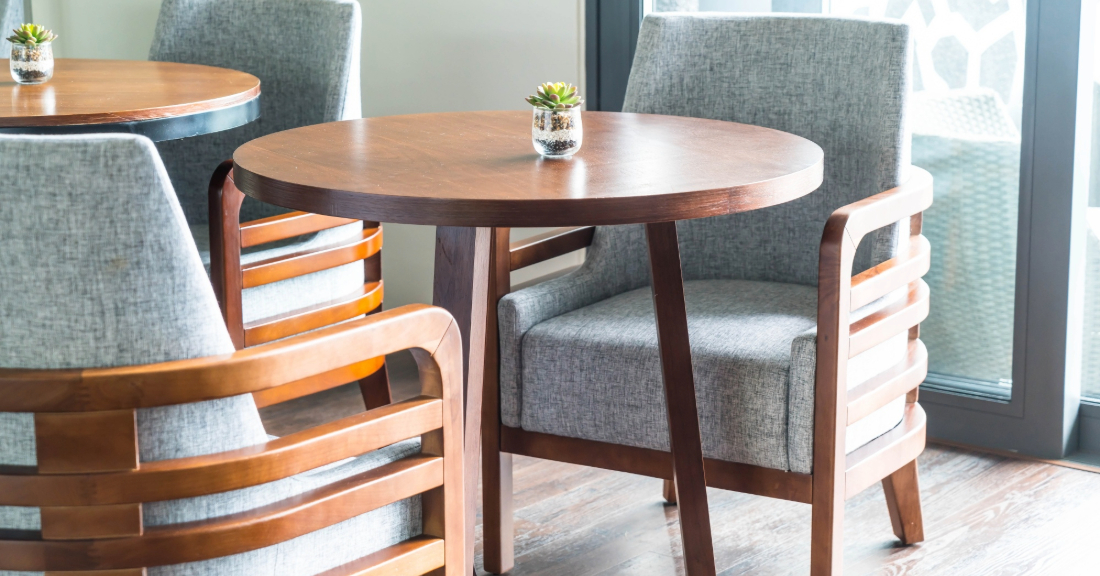
With the round tables, the idea of 'head' and 'foot' is abolished. All seats face the middle, and everyone is the same distance from each other. This design characteristic can subtly change the flow of conversation without being realised.
Round tables allow for spontaneous and regular eye contact, since the participants are looking across the table rather than along a line. This set-up will allow quieter people to join a conversation with greater ease, whether it be a shy child, a tired teen, or an elderly grandparent who speaks softly, thereby minimising the risk of marginalisation.
Round tables reduce the politeness of taking turns and enable a circular rather than a sequential flow of conversation. The participants become more apt to wait for a designated authority's approval, but more likely to contribute spontaneously. This Table shape is useful for families that want spontaneous psychological openness without trying to achieve it.
Rounded tables are more often than not perceived as more intimate than square tables, not because of the intimacy, but because of the perceived removal of the hierarchy of positioning, distance and barriers to sight.
It is Not a Matter of Just The Shape, But The Distance
Distance is a major player in this, but shape receives the most attention. The shape of the table is of great importance, but so is spatial distance. The round table and the rectangular table, with too much distance between participants, can cancel out the advantage of the round table. Not a showroom shot; it must be a balance between shape and scale. Despite the equal geometry, a round table that is too large for the space can create a sense of distance between people. Even with the “no head” benefit of a circle, a rectangular table sized to accommodate a smaller family, with everyone seated comfortably and fairly close to one another, can still foster warm, connected conversation.
This thought process implies that the aim is not to decide whether round tables are better, but to learn how a table's shape affects people's interactions. Families need to actively choose their options, rather than assume they will have to take what they can get.
Matching the Table to the Family, Not the Other Way Around
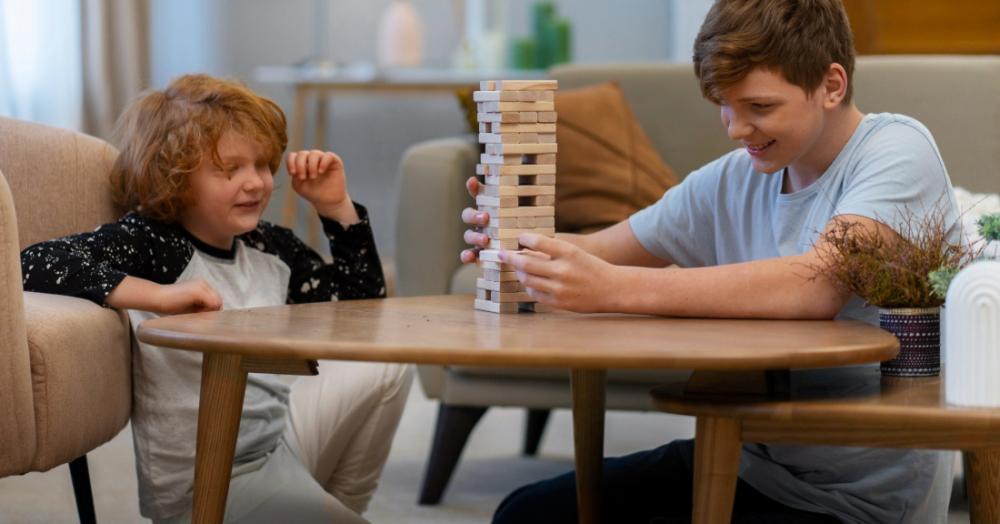
Every household has its own rhythm. Each household possesses a unique rhythm. Some families engage in meaningful conversation during brief weeknight dinners, while others reserve substantive dialogue for leisurely weekend mornings or large Sunday gatherings with extended family. Round tables’ built-in sense of togetherness, since little ones often struggle to stay engaged when they’re far from the centre of attention. A household that regularly hosts extended family, holidays, birthdays, and weekend visits from relatives might need the flexibility of a rectangular or extendable table, accepting the trade-off in intimacy for the practicality of space.
There is also a possibility of a mix, or hybrid, solution. Some families use a round table for family dinners to emphasise closeness, and a larger rectangular table when everyone needs to be seated. These are not intended to seek an 'ideal' shape, but rather to understand the needs of every family and select furniture that facilitates desirable interactions.
A Practical Observation for Assessing Social Dynamics
The next time you have a meal with your family, look at where everyone sits. Who is closest to the person leading the meal? Who is farthest away? Take note of who starts talking, who gets asked questions and who mostly listens. You can do this exercise in social situations too, like at a friend's place or during holidays. These patterns often show up. They are influenced by more than just how people are. For example, a quiet teenager might join in more when sitting at a table near others rather than at the end of a long table. This shows how where you sit can greatly affect how comfortable and involved you feel.
Watching things happen is more convincing than reading about them. When you see it happen in places you know, it really makes sense.
Why This Matters More Than It Seems
Dining tables are just seen as places to eat. They are where families talk every day. They are often the place where all family members can meet, look at each other, and talk without phones or television. This is why it's an idea to choose a table shape carefully. You should think about why you're all sitting together: to talk to each other. When you get a home update or need a new table, this is a quiet but important choice. It's not about getting the table. It's about seeing how your family talks, where people don't talk, who gets left out and picking a shape that works with that.
Finding the Right Table for Your Home
If your table isn't working, your family might want to try shapes before making a final choice. Using a table for a bit or seeing how a rectangular table works during meals can give you more ideas than just reading advice.
Shop R&R in Arroyo Grande carries a range of dining tables, from round tables built for closeness to rectangular and extendable options built for hosting, so families can actually sit down, compare the feel of each shape, and choose the one that fits how they want their conversations to go. Sometimes the smallest changes in a home, like the shape of a table, end up shaping the biggest moments in a family’s day.