
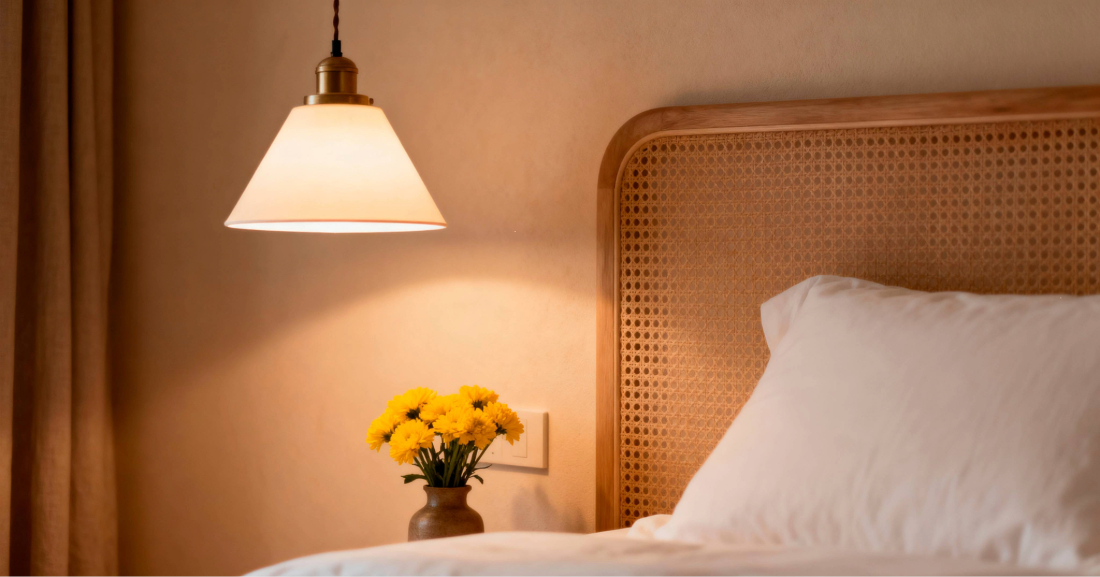
The way a bedroom is lit can influence how comfortable it feels at the end of a day. Bright ceiling fixtures are useful for tasks but they can feel harsh when you want to relax. Bedside lamps offer an alternative creating a cosy atmosphere without illuminating every corner. Thoughtful bedroom lighting can make the room more comfortable while supporting an evening routine.
Why Your Bedroom Lighting Matters at Night
Lighting affects how we experience a room and prepare for sleep. Brighter light is useful during the day while softer illumination often feels more comfortable in the evening. The brightness, colour temperature and placement of a source can all influence the atmosphere. Adjusting these elements helps create a bedroom that feels practical during the day and restful at night.
Light also influences the body's clock, known as the circadian rhythm. Exposure to light in the evening can affect the natural sleep-wake cycle. Reducing brightness before bed may help the body transition towards sleep although individual responses vary.
A single ceiling fixture may illuminate the room but it does not always suit every activity. A flexible bedroom lighting arrangement allows you to adjust the atmosphere according to your needs without making the space uncomfortable.
Why Bedside Lamps Often Feel Better Than Overhead Lights
Ceiling fixtures distribute light across an area making them useful for cleaning, dressing and organising belongings. However their brightness can feel excessive when reading in bed or preparing to sleep. Bedside lamps create a pool of light allowing the surrounding room to remain relatively dim.
The main advantage of lamps is control. By illuminating the entire room they direct light towards a specific area. A suitable lampshade can soften the light. Reduce glare particularly when you are lying down.
Lamps also complement interior styles. Ceramic bases, fabric shades, wooden finishes and simple glass designs can enhance the bedroom without requiring changes. Matching lamps create symmetry while complementary designs add personality. This does not mean overhead lights should be removed. They remain useful for activities requiring visibility. Combining ceiling fixtures with bedside lamps provides flexibility for times of the day.
Choosing Warm Lighting for a Relaxing Bedroom
The colour of light can change the atmosphere of a room. Cool white light often creates a crisp appearance while warmer tones produce a softer, more inviting effect. Warm lighting for bedroom use is particularly suitable for creating an atmosphere during evening relaxation.
Colour temperature is measured in kelvins (K). Lower temperatures generally produce warmer, light while higher temperatures appear cooler and whiter. Bulbs around 2,700K are a choice for bedside lamps because they provide a warm familiar glow.
Brightness matters as much as colour temperature. A warm bulb can still feel uncomfortable if it produces too much light. Choosing a brightness level or a dimmable bulb makes it easier to adjust the room to your preferences.
For an effect choose lampshades that diffuse light instead of allowing the bulb to shine directly into your eyes. This creates a setting while providing enough illumination for reading or other quiet activities.
How to Layer Bedroom Lighting Without Overdoing It
A designed room rarely depends on one light source. Layered lighting combines fixtures for purposes, such as a ceiling light for general illumination, bedside lamps for reading and accent lights for decorative details. Each source serves a function helping the room remain practical without feeling excessively bright.Start by considering when you use your ceiling fixture. If it is the light in the room adding a bedside lamp can improve evening comfort without requiring a complete redesign.
Dimmers make layered lighting more useful. They allow you to reduce brightness gradually than switching from a brightly lit room to complete darkness. If dimmers are not an option lamps with brightness levels can provide similar flexibility.
Warm lighting for bedroom spaces works well when the different sources have complementary tones. Choose bulbs with colour temperatures to maintain a consistent appearance. The goal is to create illumination for everyday activities while keeping the area around the bed calm.
The Best Bedside Lamp Placement for Comfort
Even an attractive lamp can become inconvenient when positioned poorly. A bedside light should be easy to reach, provide illumination for reading and avoid shining directly into your eyes. Its height and shade design determine how light falls across the bed and surrounding furniture.Consider the height of your bedside table when choosing a lamp. Ideally the lampshade should help shield the bulb from your line of sight when you are sitting or lying down.
If you read before sleeping, select a lamp that directs light towards your book without illuminating your partner's side of the bed. Adjustable wall lights are another option, especially when bedside tables have limited space.
Keep switches within reach and ensure that electrical cords do not create tripping hazards. A stable surface also helps prevent falls.Good bedroom lighting should be convenient to use. When brightness, placement and controls suit your routine maintaining an evening environment becomes much easier.
Common Lighting Mistakes That Can Affect Your Evening Routine
One mistake is relying entirely on a bright ceiling fixture even during quiet activities. Although this arrangement works well for tasks it offers little flexibility when you want a softer atmosphere. Adding a bedside lamp gives you another option without replacing existing fixtures.
Another mistake is choosing bulbs based on appearance. Decorative bulbs can look attractive. Exposed bulbs may produce uncomfortable glare depending on their position. Consider how the fixture distributes light, not how it looks.
Brightness is equally important. Bright bedside lamps can be distracting in an otherwise dark room. Choose an output for your activities and consider dimmable options if your needs change throughout the evening.
Remember that lighting is one part of a healthy sleep environment. Noise, temperature, stress, screen use and inconsistent bedtimes can also affect sleep. Adjusting the lights may help. It cannot guarantee better rest on its own.
Creating a Bedroom That Feels Ready for Sleep
Creating a bedroom does not require an expensive makeover. Begin by identifying which lights you use often during the hour before bed. If you regularly use the ceiling fixture while reading or relaxing, consider switching to an alternative.
Choose bedside lamps that complement your furniture and practical needs. If you enjoy reading, useful task lighting. For an interior compact table lamps or wall-mounted fixtures can keep surfaces uncluttered. Toned bulbs and adjustable brightness offer additional flexibility.
You can also establish an evening routine by using brighter light for tasks that require visibility and softer illumination as bedtime approaches. Reducing light exposure can help support the transition towards sleep.
Ultimately the best bedroom lighting supports how you use your space. Ceiling fixtures provide illumination while bedside lamps give you greater control over the atmosphere around your bed.Combining both thoughtfully creates a room that feels functional during the day and inviting when it is time to unwind.