
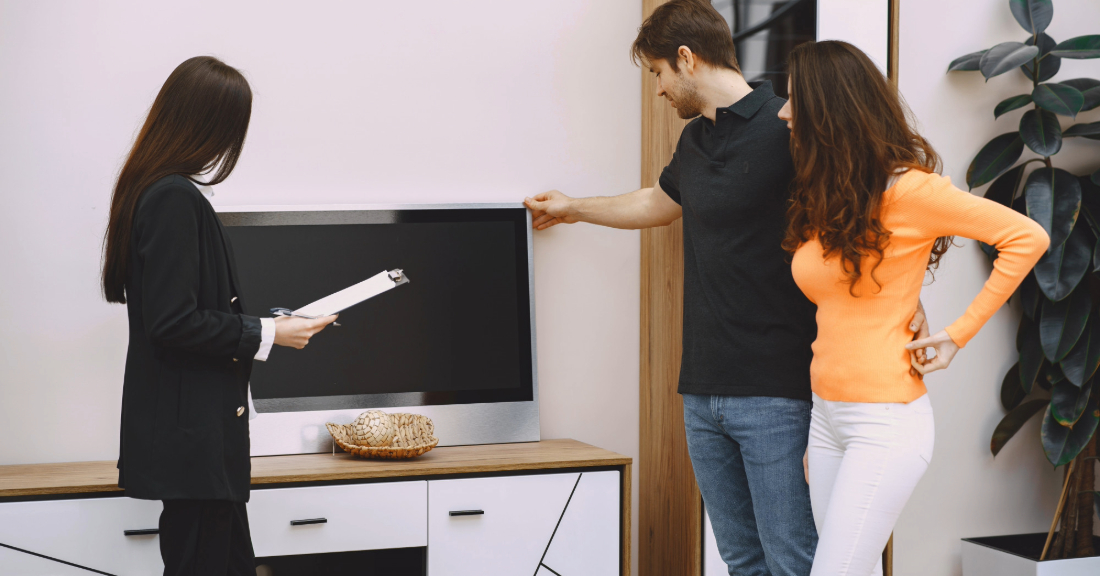
A television is often the focus in a living room. That means the furniture around it needs to feel balanced with the rest of the space. The right TV media console should support your TV, offer storage and keep all cables and devices neatly managed. It should also work well with the size and layout of the room without filling up much space. Taking simple measurements can make the whole process easier.
Start With Your TV and Wall Size
Before picking a style, measure both your television and the wall where you plan to place it. A TV can look out of place if the stand below is too narrow or if a big cabinet takes over a room. The wall size, how far people sit from the screen and nearby furniture all affect how the setup looks. Getting these measurements helps you start on the foot.
A good TV stand is usually wider than the television sitting above it. This creates a balanced look. Always measure the width of your TV including the frame, not just the screen size listed by the manufacturer.
A chosen TV media console should feel like a natural part of the room instead of overwhelming it. Check the space around windows, doors, shelves and artwork. Make sure the cabinet does not block any openings or make one side of the room feel heavier than the other.
Follow a Practical TV Stand Size Guide
A TV stand size guide can help you compare options.. The best size depends on your TV, the room size, how furniture is arranged and what you need to store. A wider cabinet might suit a living room while a smaller unit works better in tight spaces. The goal is balance, not just filling the wall.
Start by measuring your TV and then compare it to the stand. A stand that extends past both sides of the screen usually looks more balanced. Height is another factor. When seated the center of the screen should be at eye level. Avoid choosing a cabinet that holds the TV too high.
Depth also matters. Think about how the stand will stick out into the room. If your sofa, coffee table or walking path is close by, leave space so people can move around comfortably.
Decide How Storage You Need
Think carefully about what you want to keep near your television. Devices like game consoles, streaming boxes, remote controls, books, speakers and everyday items can quickly clutter shelves. Choosing storage based on what you have is smarter than buying a large unit just because it has many compartments.
An entertainment center can be helpful when you need space for devices or extra media. Larger units may include shelves, drawers and cabinets. This gives you ways to organize things.. They can also take up a lot of room.
For a setup a low cabinet with a few shelves may be all you need. A TV media console with storage keeps daily items hidden but still lets you access frequently used devices. Consider. What you have now and anything you might add later.
Consider the Room Layout
Your television should fit in with the rest of the living room, not stand. Think about where your sofa and other seating're placed. Also consider how people walk through the room and whether windows or lights cause glare. Even a sized stand can feel wrong if the TV is hard to see from the main seats.
In a layout the TV area can help define the living space. A long cabinet can anchor the wall nicely while a shorter bulky piece can help a small room feel more open.
The seating arrangement is key. The main seating should face the TV easily without requiring people to twist their bodies. If multiple seating areas are used make sure the setup works from those spots most often.
Choose a Style That Works With Your Furniture
The TV area should blend in with the rest of the living room then stand out as a separate display. Look at the finishes, colors, shapes and materials in use. Everything doesn’t have to match but some shared elements create a more unified look.
Wood finishes add warmth. Can match existing furniture. Neutral or simple finishes keep the room feeling light and airy. If your other furniture has lines or details a quieter cabinet can help balance the space. In a room a more unique piece can serve as a focal point.
Also think about the weight of the furniture. A dark heavy cabinet might work well in a room but feel too strong in a small one. Open shelving and lighter finishes give a spacious feel though they require more effort to keep organized.
Plan for Cables and Devices
Cable management is something many people forget when choosing a TV stand. Your TV media console should allow space behind the equipment so wires can run neatly. A cabinet might look clean from the front. Become messy when power cords and device wires hang out the back or side.
If you use devices make sure there is room for each one and that they are easy to reach. Game consoles, streaming devices, speakers and other equipment should not be packed into cramped spaces.
It’s also wise to leave room for future additions. You might decide to add a soundbar, a new gaming console or another streaming device down the road. Having a little extra space now avoids needing to replace the stand
Balance Function and Proportion
The best TV stand isn’t always the biggest or the most expensive option. It should fit the room, support your television, securely provide the storage you need and match how you use the space. A practical TV media console makes daily life easier without becoming the object in the room.
Look at the wall before making a choice. If the TV is mounted the cabinet below can offer storage and balance. If the TV sits directly on the stand make sure the base fits properly and the furniture can support it safely.
Proportion matters from every angle. A tiny stand under a screen may look unbalanced. An oversized cabinet in a room can make the space feel crowded. Consider your measurements, existing furniture and storage needs together.
Make the Final Measurements Before Buying
Once you find a style you like, double-check all measurements before buying. Confirm the width, height depth, shelf sizes and any weight limits listed. Also check if your TV requires a stand or mounting setup especially if it will go directly on the cabinet.
Your TV stand size guide is useful for comparing options. Your own room measurements decide if the furniture actually fits. Measure doorways, furniture, power outlets and the space needed for cables and devices.
If you’re choosing an entertainment center measure where each device will go or assuming it will all fit. This is especially important when equipment varies in size or needs airflow.
Finally make sure the furniture works in life. Storage should be easy to access. The TV should be comfortable to view from the seating.. The stand should not get in the way of movement. A smart choice keeps the living room tidy. Fits naturally into the space.