Some furniture choices are simply a matter of preference. Move a side table, a lamp, a rug, anything you like looks good; anything else, you move it. A sofa is not the same, however. A sofa is a place where a family really occurs. It’s where people fall asleep during the movie, where arguments get resolved, where a Sunday afternoon quietly slides away and where it is. There it is; it’s where people fall asleep during the movie, where arguments get resolved, where a Sunday afternoon quietly slides away, and there it is. But when Santa Maria residents begin to pull out sectional sofas instead of the standard two-piece set in the living room, they might want to consider what is really behind the decision, since it’s not about size.
This is one of the changes that we at Shop R&R have seen slowly take place and then suddenly, all at once. In the past several years, I have been furnishing most of the living rooms in Santa Maria that have been in my frame of mind, and you will notice that most of them have the same layout: a sofa here, a loveseat there, and a couple of accent chairs in the mix. Most people prefer one long piece that ties the room together these days, rather than separated pieces. It's not just a minor design preference. It reflects the reality of how people wish to come together.
Why a sectional feels different to sit on, even before anyone says a word
The difference between a room where you'll find individual seats, and a room around one continuous shape is subtle and psychological. Even if they're set out nicely, separate pieces do form small social divisions, not necessarily by design: Who's on the sofa, who's in the chair, who's a little further from the conversation. It’s rarely deliberate. That's what happens when furniture is cut off from each other into islands.
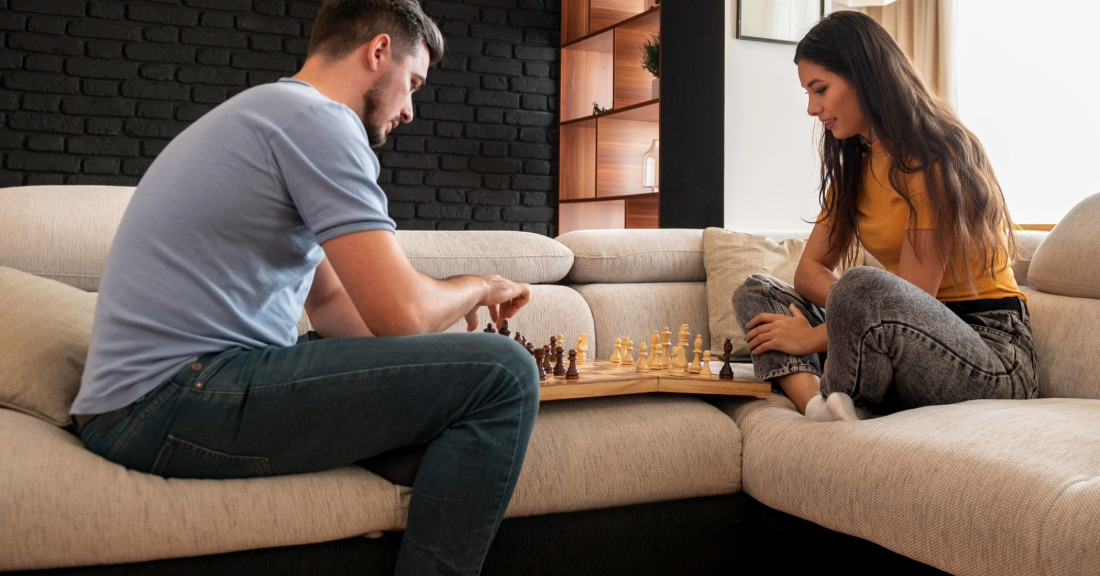
A sectional will almost completely get rid of that division. It's one big piece of furniture, so the user is not inhibited in sitting anywhere, shifting positions, curling a leg up, leaning toward the speaker, etc., without the furniture itself indicating a hierarchy of good seats. That is more important than they would think. You can feel the comfort in shared, continuous space, of having everyone in the room be in the same action, have their own, not all of which may be the same. A sectional does that automatically, just because of its shape.
Santa Maria living rooms carry a particular kind of weight
Homes in this area usually have a lot of people living in them. It is not unusual to find people in one house. Many families have generations living together. People like to get together and have big gatherings. This is because the area is focused on farming and ranching. On Sundays, people like to have a big barbecue in the backyard, like the ones they have in Santa Maria. The living room is usually full of people by the afternoon even if nobody planned it that way. Sundays are just not the same without all these people coming over. The Sunday gatherings are always easy and fun. People show up. Everyone has a good time. Sundays would not be Sundays without these gatherings, barbecues, and a full living room.
That’s enough to put a strain on a traditional sofa-and-chairs arrangement. There’s always somebody standing, or sitting on the edge of the conversation, or sitting on an ottoman. A sectional, particularly a large one, can take that pressure; smaller, broken-down sections can’t. It does NOT require a house to be organised around furniture. It fades to whatever the day truly entails: three or twelve people, a quiet Tuesday evening, or a packed Saturday!
The emotional logic of “there’s always room”
There is a kind of relief that comes from never having to think about whether there are enough seats for everyone. It is a thing, but it can be a big deal. You do not have to do that math in your head when people start showing up. You do not have to feel a little awkward when you have to go get a chair from another room. A sectional sofa takes care of all that. Somebody can always. That makes a big difference in how people feel when they are together.
This is especially true in homes where people are always coming over. Hosting is not just something that happens every now and then; it is what they do. For example, this can look like:
- Family members showing up for the weekend without calling and being able to sit down comfortably right away.
- Kids sprawled across one end while adults talk at the other, without anyone feeling separated from the room.
- A movie night that quietly turns into six people instead of two, with nobody needing to grab a folding chair.
- A quiet weekday evening where one person stretches out fully, using the whole shape of the piece without needing anyone else’s permission or cooperation.
- Guests who linger longer than planned, simply because the seating never felt like it was working against the conversation.
None of these scenarios is really about the sofa’s dimensions. They’re about a living room that doesn’t put limits on how many people, or how much life, it can hold at once.
Why warmth of tone matters as much as shape
Shape is a solution to the social side of things; tone is a solution to something quieter: the way the room feels to sit in. If a pale, flat fabric is used for a sectional, it can become more of a showroom design than a room for actual use, particularly in a room that’s supposed to be lived in for many years. Deep warm hues have other effects. They’re not precious, but they’re grounded, inviting and not delicate. Warm-toned, rich-sized sectionals don’t require a home to take precautions around. It goes to bed in a room like a comfy old favourite chair, and this time it’s comfortable for all.
That warm feeling also has a side to it. Lighter, cooler furniture might look right in the room. It can feel a little cold emotionally, like everything is in place but not really welcoming. A colored frame and fabric, on the other hand, make a living room feel like it has been used and enjoyed, not just put together for show. It's the difference between a room that looks good in pictures and a room that people really want to be in, during the evening.
A shift in how people think about “the living room” itself
Part of what’s happening here goes beyond furniture entirely. Living rooms used to be organised around a single focal point (usually a television), arranged formally, with everyone facing forward. That model assumed togetherness meant facing the same direction. A sectional assumes something a little different: that togetherness is really about proximity and ease, not formation. People angled toward each other, half-facing a screen and half-facing the room, conversation and background noise blending without much effort.
This is a change in what the living room is used for. From just being a place for people to do things together, the living room is now more about being together in the same space. It's a place where people can read a book, watch TV, or talk softly but still feel connected. The sectional sofa helps with this because its design makes it easier for people to be close and do their own things at the same time. This is better than arranging chairs and sofas in other ways.
A piece of furniture that grows with a household, not against it
Also, it is worth noting how well a sectional performs when it comes to change. Typically, the house is not a permanent fixture: a child grows up and adds friends to the mix, a parent comes in for a while, a couple who used to host in the background becomes the one everyone wants to know about and bring over for an extended family gathering. Stiff furniture set-ups are not good at that kind of progression. A formal sofa-and-two-chairs arrangement is designed for a particular quantity, and it shows when that amount varies. A sectional, in particular a modular, is more flexible than a fixed layout. Whether you’re trying to fill up a smaller, less raucous space or a full house, it won’t go on the record as being the wrong size for any particular occasion. It’s easy to forget about when decorating a room “as is,” but when the family that lives around it has, say, quietly morphed into something a little different, adaptability will come into play a few years later.
What this says about the people choosing it
That's a change in what a living room is about. It's not much a place for doing things together and more a place for being together, a space where people can be doing different things (reading, watching a show, a little talking softly) but still being in the same feeling space, at the same time. A sectional, because of the way it is shaped, makes that kind of easy mixing togetherness more naturally than a formal way of sitting ever could.
Where this leaves you, if you’ve been circling the idea
If you’re having to rearrange furniture to accommodate distance in your living room, or you’re having to decide how to rearrange seating before people even get to your home, it may be time to consider what that room would have felt like if it had been just big enough, not for a hypothetical group, but for the actual rhythm of your household. After all, comfort is not all about a perfect seat. It is a room in which people are not forced to choose between being close to someone and being comfortable.
Shop R&R’s collection of sectional sofas was built with exactly that kind of ease in mind: deep, warm tones and generous shapes designed to hold a household exactly as it is, not as a diagram suggests it should be. Explore our sectional sofas here, or visit our showroom in Arroyo Grande (we proudly serve Santa Maria and the surrounding Central Coast) and let us help you find the piece your living room has been waiting to gather around.
This represents a significant shift in the function of the living room. Rather than serving solely as a stage for shared activities, the living room increasingly acts as a container for shared presence. It provides a space where individuals may engage in different activities, such as reading, watching television, or conversing quietly, while still sharing an emotional environment. The sectional sofa, by virtue of its design, facilitates this flexible and overlapping togetherness more effectively than traditional formal seating arrangements.
This is a change in what the living room is used for. Of just being a place for people to do things together, the living room is now more about being together in the same space. It's a place where people can do things like read a book, watch TV or talk softly but still feel connected. The sectional sofa helps with this because its design makes it easier for people to be close and do their own things at the same time. This is better than arranging chairs and sofas in other ways.