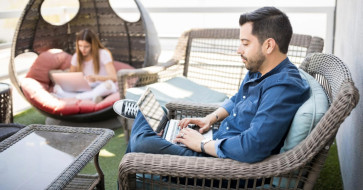
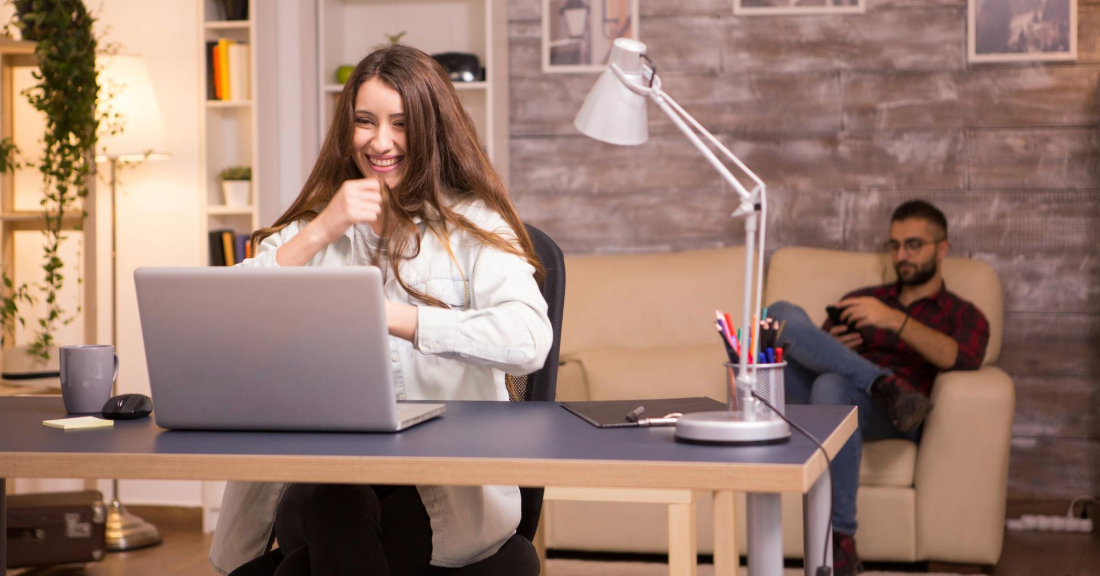
A home office wasn't a home office; it was more of a desk. It was at a corner table in the kitchen, on a knee with the laptop in the living room, or any other surface available that day. The work was merely "taken" from the rest of the house and no contribution made. That is no longer the case, though, and nowhere is it more apparent than in the way people are filling the spaces in which they really get things done.
We've seen this change right before our eyes all throughout Santa Maria at Shop R&R. A few years ago, most of the home offices were an afterthought and whatever space was left. Now, folks are requesting real desks, real storage, real furniture that values the work-from-home time as much as any other. On the sheet of paper, it's a little change, but it represents a much deeper shift in people's relationship with their own time and attention.
Why “good enough” furniture stopped being good enough
Even if it may not be easily quantifiable at the time, there is a psychological price to working in an environment that wasn't designed for it. Being seated at the kitchen table is a constant tussle with the other family members, food, mail, anything else that arrives at the table during the day. The laptop on the couch turns working and relaxing into a grey area, or even a non-existence. But this is no drama; it all adds up. The mind gets taxed with every little negotiation, with every set-up improvised and just not like a space that is properly furnished.
This is where the concept of cognitive load is helpful, without overexplaining it. You can see how many people are in the room, how loud the music is, where the furniture is, etc., either consciously or unconsciously, all the time, and cluttered, borrowed, improvised environments have a low hum going on in the background. All of the foregoing makes that hum quieter, and all of the following makes the hum quieter: a dedicated desk, a chair that was made for sitting for a great deal of time, a space for cords and papers to live in, etc. It's not a big lift either. It's an easier focus - the kind which previously required actual effort to produce.
Santa Maria’s relationship with work has always been practical, and that’s changing too
This is a place built on work that has weight to it, agricultural, hands-on, generational. There’s a long-standing respect here for taking a job seriously, for having the right tools for whatever the task happens to be. It makes sense, in a way, that this same instinct is now showing up in how people treat their home offices. If you wouldn’t work a field with the wrong equipment, why would you build a career from a wobbly folding table pushed into a spare corner?
Simultaneously, fewer people are working in the same ways as did a generation ago, in a storefront, remotely, or hybrid. At exactly the same time, fewer people are working in the same ways as did a generation ago, in a storefront, remotely, or hybrid. That's an evolution that has taken a long time to occur so slowly that furniture is frequently behind the curve. People make schedule changes and change their responsibilities long before they make the room changes they need to make. Eventually, however, the disparity is evident. The work has sprung up. It's not caught up yet.
What people are really asking for when they ask for a desk
Nobody walks into a furniture conversation saying they want to feel more like themselves at work. But that’s usually somewhere underneath the request. In practice, it tends to sound like:
- Wanting a space that signals “working hours” to the rest of the household, so work doesn’t quietly bleed into every hour of the day.
- Needing enough surface and storage that a laptop doesn’t have to share space with everything else happening in the house.
- Need a place where you don't have to explain to the person you're talking to that the background looks unpresentable on video.
- Avoiding furniture products that are only made for the short term, and simply purchased on the spur of the moment during the first time working remotely.
- Simply wanting to feel like a professional, even while working from home in sweatpants.
None of these needs is really about desks and drawers in the practical sense. They’re about wanting the space to reflect the seriousness of the work happening inside it.
The quiet psychology of a boundary you can see
One of the many things a good home office does that doesn't get enough credit is setting up a visible, tangible distinction between work and other parts of life. If there's no boundary, then work can seep in during the evenings, on weekends and during 'me' time that should be dedicated to something else. A special desk, preferably in a separate, defined area, tells the mind that this is where work occurs, and elsewhere it doesn't need to.
This is more important than many realise and is particularly important for people who work remotely 100% of the time. No commute, however, meant no chance to have a transition ritual, which was once a time that was considered a convenience between “at work” and “at home.” A well-equipped office mimics that change. Even if you don't get out of your house, walking in, sitting down at a real desk, closing the laptop, and walking out puts the day back into shape.
Why the room still needs to feel like a home, not an office park
When decorating an office at home, it's easy to get tempted to look like a workplace instead of a home. However, this is a trait that often goes awry. A room that's sterile and purely functional will make work seem like more work than it is, and it will be a constant reminder of obligation, not a place where the person working in it is also at home.
The superior thought is to leave the room warm, homey, lived-in and still functional. Real desk with good drawers. A chair that's truly comfortable, not just functional, for hours. A shelf for all those things that make the room feel like a room in your own house – not a cubicle in a rented space. A comfort in catching a glimpse of something familiar, a picture, a plant, a favourite object – not a blank wall – while working on a task. It's a kind recognition of a psychology concept we all know: We're more likely to feel depressed in the room where we spend our time than we realise. And a working room makes the hours pass more quickly than a working room, even if it's ours.
A space that grows with the work, not against it
Home offices are most likely to evolve over time, changing their shape. In many ways, the initial laptop on a tiny desk can quickly turn into a larger “work” station: more files, more equipment, more time spent in the same location as work becomes a larger part of daily life. Furniture that was hastily and cheaply selected in the early stages of development seldom meets with that expansion. It doesn't end up replaced because it breaks; it just never was intended to be kept as is for a long time.
Eating up all that cycle upfront is avoided when you get a real desk, real furniture, and real storage, and a chair that you use for real, every day. It's furniture that can accommodate a changing load rather than having to be replaced with each new configuration. There is a little bit of a silver lining there, too, a little less to worry about as everything else continues to change.
A room that quietly reflects who’s doing the work
There's another thing to be mentioned about this. A home office isn't a functional area of the house; it's the room that belongs totally to the individual, that he or she uses for his or her work and not shared with any other person in the household. Ownership is much more important than it seems. A planned, rather than merely cluttered, room has a more authentic feel to the activity it's used for. So it's not that a lot, but it's a thing that sitting at a desk that is chosen, and separate from where you are sitting, and distinct from where you improvised or inherited it from somebody else makes the work that you do there a little more real, a little more worth showing up for every morning.
Where this leaves you, if your setup still feels temporary
If your home office still feels like it's a place you're taking out on loan rather than having in your home, you may want to consider what it will take for it to be completed. Not fancier, necessarily. Just intentional. A place that takes your work and ultimately your time.
That's why all of the home office furniture and desks in the R&R home office selection start with a shift; no more borrowing a corner, but rather an actual room designed for the way you live. Shop our home office furniture, and help make a home office you can enjoy here in Santa Maria that suits the work you’re doing in it.